Plymouth Sound National Marine Park
Plymouth’s coastal waters are home to a diverse array of habitats and wildlife, which underpin the city’s reputation as “Britain’s Ocean City” and its strong connection to the sea. The presence of unique marine features such as estuaries, reefs and salt meadows, led Plymouth Sound and the surrounding estuaries to be designated a Special Area of Conservation (SAC) in 2005. Later, in 2021, these waters were nationally celebrated and became the UK’s first National Marine Park, creating a powerful opportunity for ocean engagement, education and conservation.
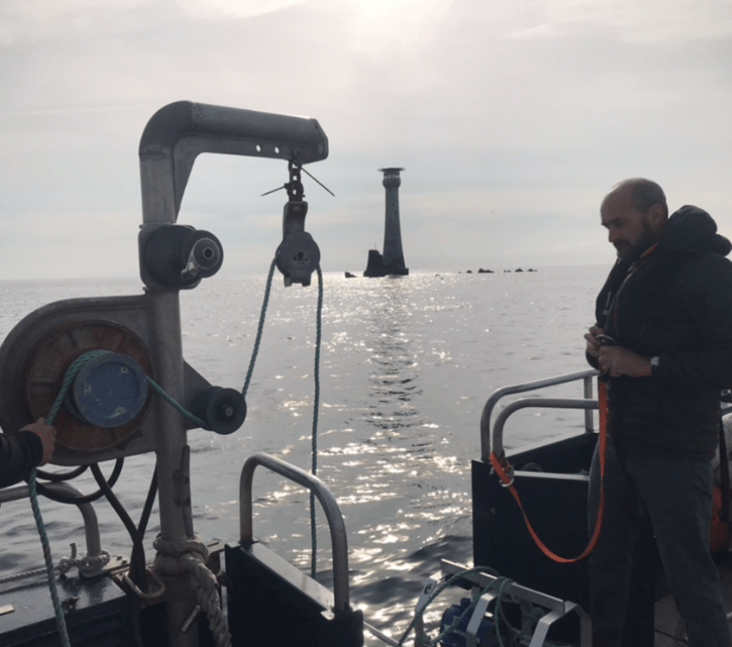
Beyond the boundaries of the Plymouth Sound, the Eddystone lighthouse lies 20km from shore. The Eddystone reef comprises a mountain range of dramatic pinnacles rising up from 50 metres to within 15 metres of the surface. The peaks of this reef system were targeted by trawling fisheries, until 2014, when the Cornwall Inshore Fisheries and Conservation Authority (CIFCA), prohibited the use of bottom-towed gear within the Start Point to Plymouth Sound & Eddystone SAC.

Long-term Monitoring Research
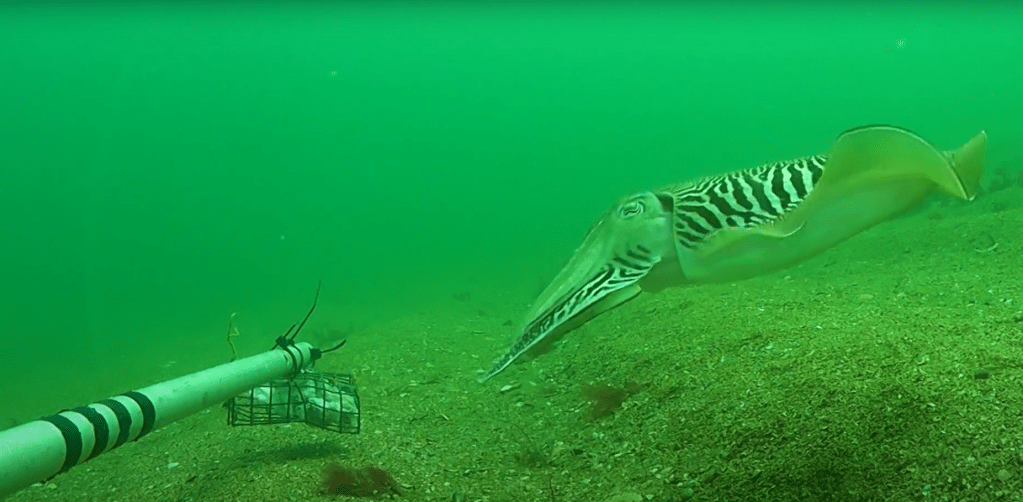
Through the PlymFish project, aMER has partnered with the Marine Conservation Society (MCS) to establish a baseline of information about biodiversity and habitat health against which the effects of spatial management can be measured. The project is beginning its sixth year of data collection, with five years of data already collected. The study uses non-invasive video methods (towed and baited cameras) to assess species richness and abundance across various benthic features, including kelp forests, rocky reefs and seagrass beds. Recent continuation of the survey has been supported by the Environment Agency.
So far, we have detected a range of fascinating species such as thornback rays (Raja clavata), cuttlefish (Sepia officinalis) and catsharks (Scyliorhinus canicula) taking advantage of the rich seagrass beds around Drake’s Island and Cawsand. We have even spotted rarer species such as John Dory (Zeus faber) and Atlantic bluefin tuna (Thunnus thynnus) within the Sound. Meanwhile, monitoring in Jennycliff Bay, the site of England’s largest seagrass bed restoration project, is aiding our understanding of this vast rewilding scheme and its ecosystem impacts.
Long-term monitoring is crucial to disentangle natural and human-driven changes in marine communities. Therefore, this project will play a key role in improving our understanding of Plymouth Sound’s unique combination of reserves, whilst getting aquatinted with our marine residents.


Ecosystem services
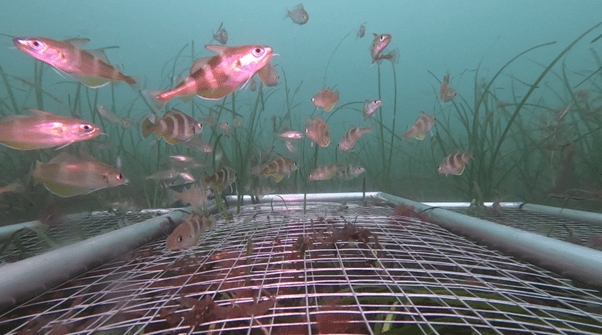
Long-term monitoring of Plymouth National Marine Park’s diverse habitats has enabled analysis of their ecosystem services. Jessica Cramp, a PhD candidate at the University of Plymouth, is investigating the services provided by the restored seagrass beds at Jennycliff Bay, Cawsands Bay and Cellar’s Cove. Comparing species in sandy sediment and seagrass habitats has highlighted the habitat value restored seagrass beds provide after human disturbance. She is combining this analysis with environmental DNA and sediment core studies to further understand the ecosystem services provided by the seagrass habitat.
As part of her PhD, Matilda Longstaff assessed Plymouth’s Kelp reefs as an essential habitat for the Environment Agency as part of the Natural Capital Ecosystem Assessment. For this project she designed and produced an attachment to the underwater Baited Remote Underwater Video set up to flatten the vegetation reducing the number of blocked videos in the kelp habitat by 66%. The same attachment was successful in the seagrass habitat. The report suggested that the kelp habitat was important for supporting a higher diversity of fish species than both the seagrass habitat and bare sediment and was particularly important for commercial fish species.
Acoustic Receiver Network
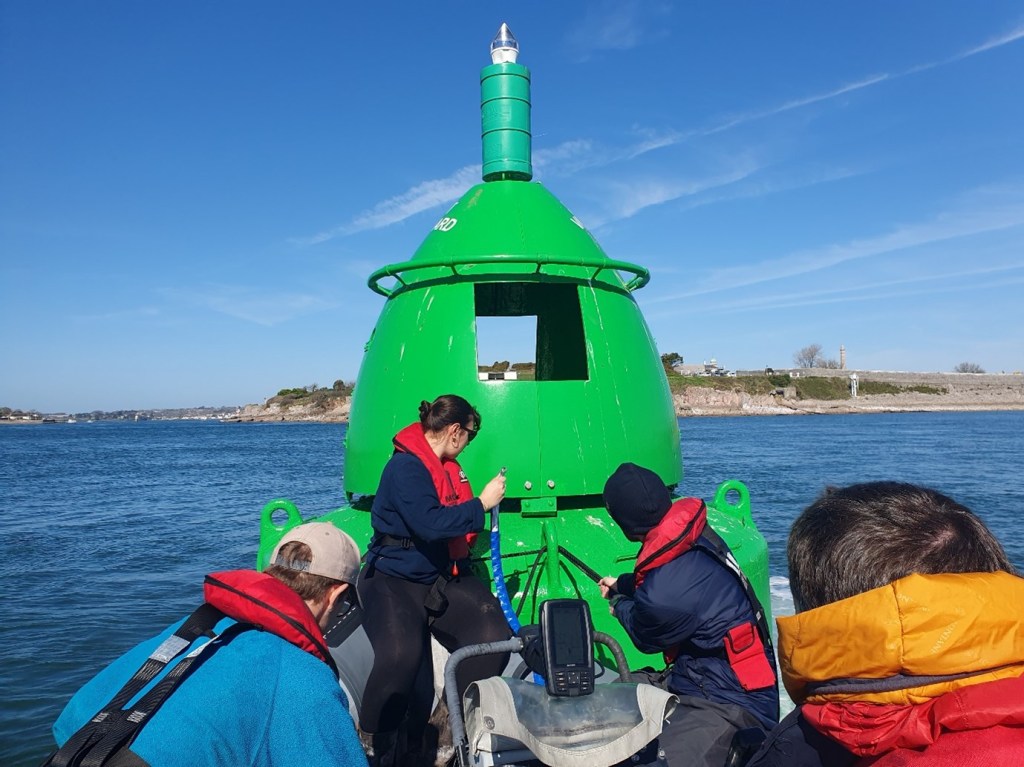
As part of her PhD titled “Sound of Sharks”, Matilda Longstaff will be using acoustic telemetry to tag small spotted catsharks (Scyliorhinus canicula) in the Plymouth Sound. These devices emit a signal that is registered by an acoustic receiver device when the animal is in proximity to it. With the help of King’s Harbour Master, we were able to use the large navigational buoys across Plymouth Sound to create a network of acoustic receivers along with more positioned along the coast. The data obtained from this acoustic telemetry will allow understanding of the movement and habitat preferences of shark species within Plymouth Sound and will provide vital evidence and advice to key stakeholders, enforcement bodies and policy makers. The combination of analysis of underwater videos with the tracking will provide further insight into the behaviours and associations of the different shark and ray species found in Plymouth Sound across different habitats.

 aMER - applied Marine Ecosystems Research