Explore the map below to see what the team are working on, or see the list of projects at the bottom of this page.
Current projects shown as green circles with fish icon, past projects shown in orange pins.
Current projects

Lyme Bay Reef Recovery: Long-term Monitoring Research
Assessing the long term recovery of the Lyme Bay marine protection area using non-destructive video arrays.
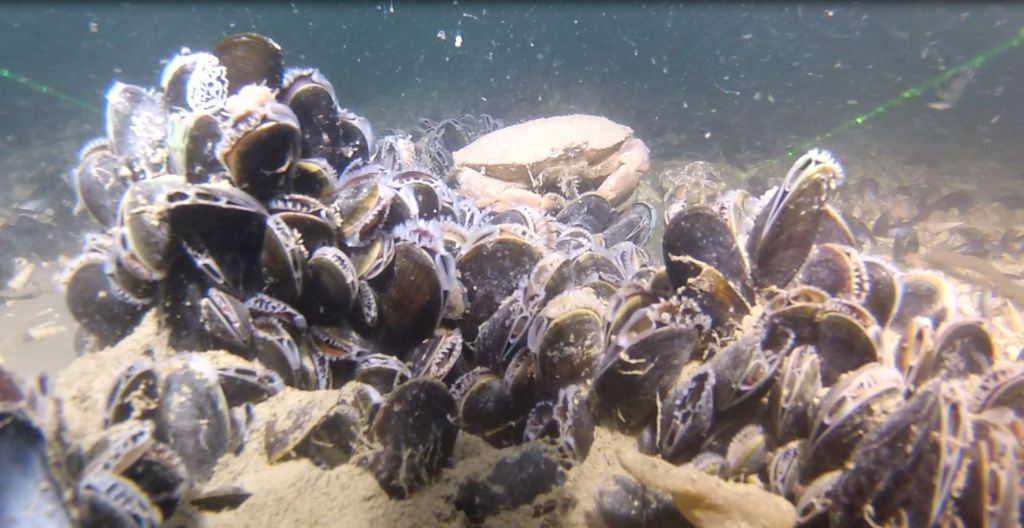
The Offshore Mussel Farm Ecology project is investigating the impact that Europe’s biggest mussel farm is having on the surrounding ecosystem.

Plymouth Sound National Marine Park Long-term Monitoring Research
Working in partnership with Marine Conservation Society to etablish a baseline of information about biodiversity and habitat health in the Plymouth Sound.
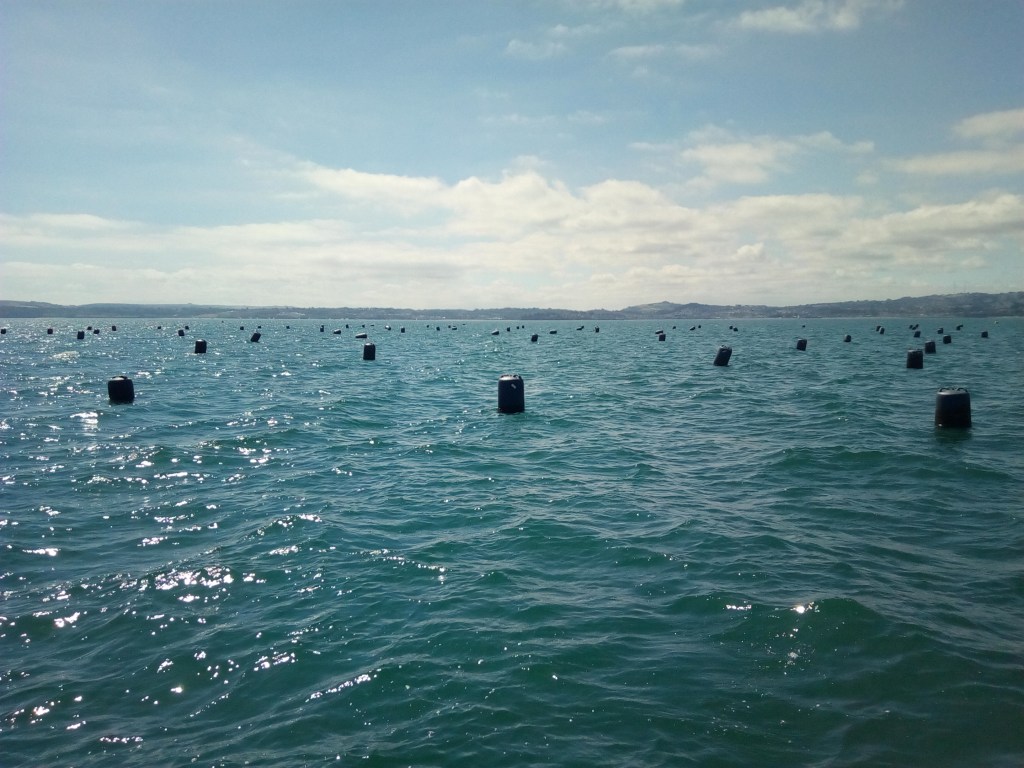
Torbay Scallop Farming Project
How can we produce food from the sea without harming the ecosystems that support it?

A cross-Channel project that uses innovative underwater acoustic tracking technology to identify habitats that are critically important to a range of marine species at various stages of their life histories

Isles of Scilly trawling impact study on reef sediment veneer habitats
Studying the impact of mobile fishing practices on the marine sediment habitats surrounding the Isles of Scilly.

Evaluating habitats and species in the MPAs around Jersey where mobile fishing gear has recently been banned, as well as socio-economic responses to this approach to fisheries management.

Working in partnership with the Blue Marine Foundation to build an ecological baseline of the coastal Marine Protected Areas in Berwickshire, Scotland, and its surrounds.

Studying the ecological effects of a no take zone around Lundy Island, 19 years after its designation.
Past Projects

Evidencing the ecosystem services and benefits of offshore mussel farming to biodiversity and restoration of essentials fish habitat.
Identifying spatial and temporal movements of a declining and economically important species in the South West.

Angling for Sustainability FISP
Focusing on the environmental sustainability of the recreational angling sector, the Angling for Sustainability project will aim to fill data gaps on black bream and elasmobranch species.
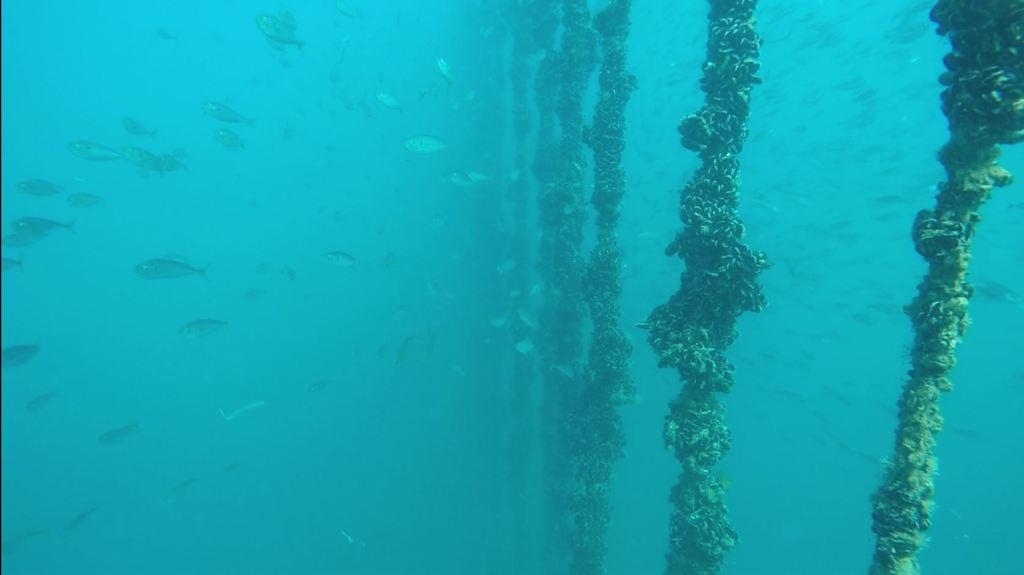
Response Of predators to Protection and Enhancement
ROPE focuses on how mobile species of commercial importance (e.g. brown crab, Cancer pagurus, and European seabass, Dicentrarchus labrax) interact with an offshore longline mussel farm using acoustic telemetry.
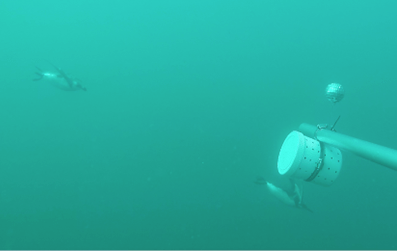
Marine Giants explored novel, cost-effective, fishery-independent methods to survey pelagic marine species in UK coastal waters.

Recover-Reef picks up the baton from the RETURN project, monitoring the changes brought about by the cessation of bottom towed fishing in Lyme Bay, southwest England. Recover-Reef will add evidence to evaluate how management approaches lend themselves to the recovery of reef systems which support commercially important shellfish and finfish stocks.

RETURN: Reserve Effects Tested and Understood to validate ReturN
RETURN extends the Lyme Bay monitoring programme through to 2019, building on what is already the most comprehensive dataset for temperate reef ecosystems globally.

Immature Bass Acoustic Stock Surveillance
I-BASS investigates how European bass, Dicentrarchus labrax, use nursery areas through the tagging of juvenile bass and installation of acoustic arrays in three bass nursery areas in the southwest of England.

BIOTA: British Indian Ocean Territories Atoll project
BIOTA investigates the effects of deep ocean water flushing upon planktonic communities within the coral atolls of the British Indian Ocean Territory including Diego Garcia, Peros Banhos, Salomon and Egmont.

Defining thresholds for optimal fishing
The potting intensity project aims to assess the impact of static potting on benthic reef habitats as well as commercially targeted species within the Lyme Bay MPA.

Strategic Environmental Assessment of Wave energy technologies
SEA Wave focuses on the environmental response to the installation of wave energy converters in Orkney, Scotland. The project aims to address the long term environmental concerns regarding the development of wave energy.

Working with the Isles of Scilly IFCA to build baseline information about the habitats and species in the waters around Scilly.
CEFOW incorporates environmental monitoring to aid the understanding of the ecological consequences of upscaling from single to multiple wave energy devices and contextualise device-specific ecological responses.

Gorgonian coral (pink sea fan) skeletons have been observed on beaches across southwest England entangled in marine debris. We worked with citizen scientists and students at the University of Plymouth to assess the composition and distribution of these “sea fangles” from around southwest England.

Studying the habitats and species at Wave Hub to evaluate the impacts of a renewable energy installation off the Cornish coast.
 aMER - applied Marine Ecosystems Research